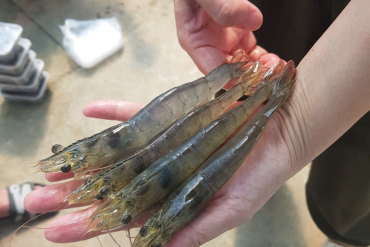
Precision Aquaculture and AI: What It Can Do—and What It Can’t
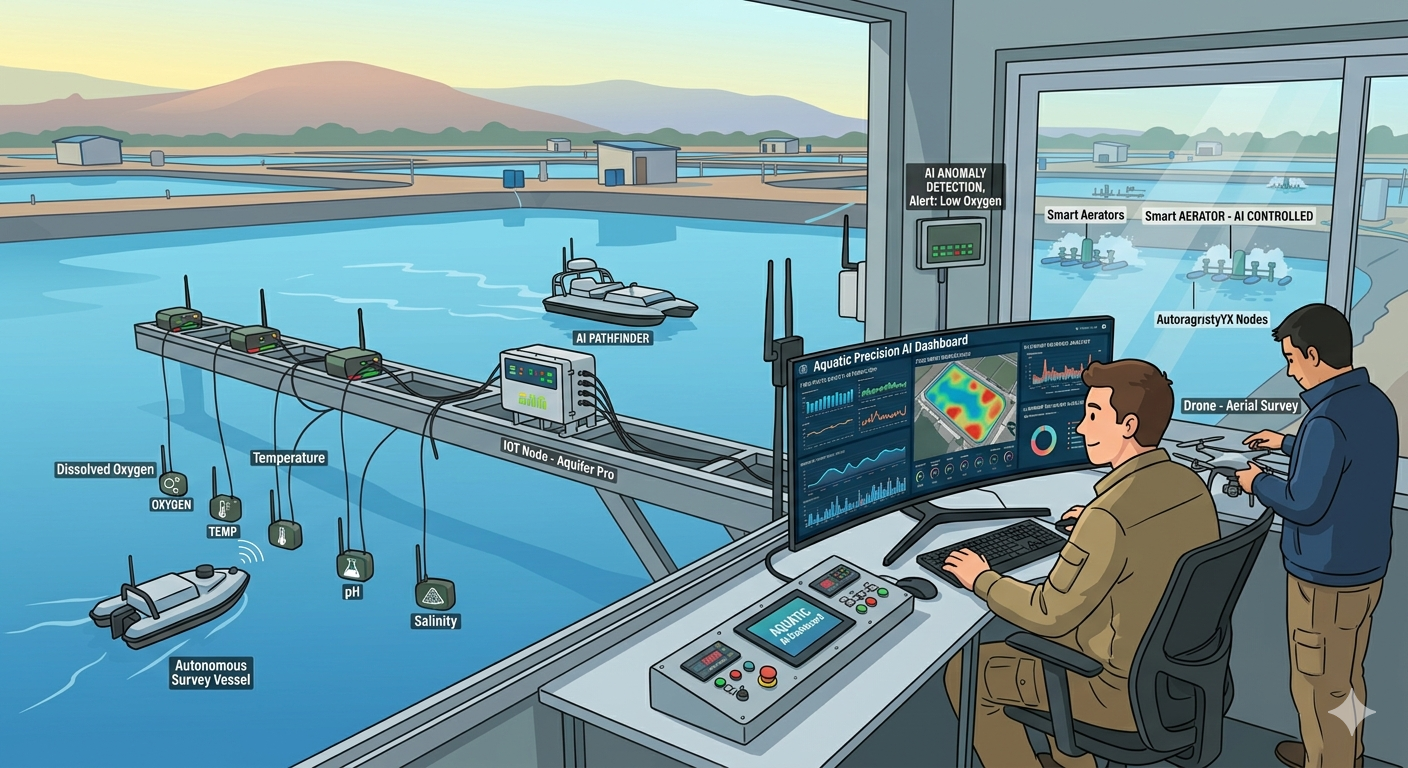
Modern aquaculture is increasingly adopting technologies such as sensors, automation, and artificial intelligence (AI) to improve farm control and efficiency. This approach, often referred to as Precision Aquaculture (PA), allows farmers to monitor and respond to changes in real time instead of relying only on manual observation.
At the same time, the industry is moving toward a more balanced approach—sometimes described as Aquaculture 5.0—where the goal is not just using more technology, but building stable, reliable systems that work under real farming conditions (Animal Reports, 2026).
IoT and AI Monitoring: Better Data, But Not Plug-and-Play
Many farms now use sensor networks (IoT) to track water conditions such as temperature, pH, and dissolved oxygen. These systems can be connected to AI tools that help farmers react quickly—for example, turning on aerators automatically when oxygen drops at night.
This improves response time and reduces the risk of sudden losses.
However, these systems are not “set and forget.” In practice, they require:
- Correct sensor placement
- Frequent calibration (daily or weekly)
- Regular maintenance to avoid inaccurate readings
If sensors are not properly maintained, the data can become unreliable. This can lead to incorrect decisions, especially when systems are automated.
In other words, AI monitoring improves control, but it also requires more disciplined farm management, not less.
Computer Vision: Useful in Theory, Limited in Practice
Computer vision is being used to observe shrimp behavior, feeding activity, and signs of stress without handling the animals (Animal Reports, 2026). In controlled environments, this can reduce labor and improve consistency.
But in real shrimp ponds, there is a major limitation: water visibility.
Typical pond conditions:
- Brackish or biofloc water
- High organic content
- Visibility often limited to around 30 cm or less
This makes it difficult for cameras to capture meaningful data across the entire pond. Most systems can only observe small areas or controlled tanks, which may not represent the full farming environment.
As a result, computer vision is currently best used as a supporting tool, not a full replacement for on-site observation.
Automated Feeding: Real Gains, Still Needs Oversight
AI-driven feeding systems are one of the most practical applications of precision aquaculture today. These systems adjust feeding based on shrimp activity and environmental conditions.
Under well-managed conditions, they have been reported to:
- Improve feed efficiency by up to 30%
- Increase survival rates by around 33%
- Reduce feed waste, which can reach 25–30% in manual feeding (Animal Reports, 2026; Sustainable Innovations, 2025)
This leads to better water quality and more efficient use of feed.
However, automated feeding still requires:
- Monitoring of feeding behavior
- Adjustment based on shrimp growth
- Cross-checking with real pond conditions
If not properly managed, automation can still lead to overfeeding or underfeeding.
The key point: automation improves consistency, but it does not replace experience.
Looking at the Whole System
These technologies bring clear benefits:
- Faster response to changes
- More consistent operations
- Better data for decision-making
But they also introduce new challenges:
- Dependence on accurate calibration
- Differences between controlled setups and real ponds
- Continued need for human judgment
Research also shows that performance and sustainability vary significantly between different farming systems, highlighting the importance of overall system design, not just individual technologies (PMC, 2026).
Conclusion: Technology as a Tool, Not a Solution
Precision aquaculture is not about replacing farmers with technology. It is about giving farmers better tools to understand and manage their systems.
The difference between success and failure will not come from the technology itself, but from how well it is applied in real-world conditions.
References
- Animal Reports. (2026). Technological innovations are driving precision aquaculture towards a future of transparent, automated, and sustainably efficient production.
- PMC. (2026). Analysis of sustainability differences among various shrimp farming models. https://pmc.ncbi.nlm.nih.gov/articles/PMC12855254/
- Sustainable Innovations. (2025). Sustainable Innovations in Shrimp Aquaculture: Current Advances and Future Horizons. MDPI, 10(10). https://www.mdpi.com/2410-3888/10/10/498
More Related Articles
Managing Alkalinity in Shrimp Ponds: Why It Matters and How to Increase It Using Lime