U.S. Shrimp Imports Continue to Decline in Early 2026
U.S. shrimp imports declined in early 2026, continuing the trend that began in the second half of 2025.
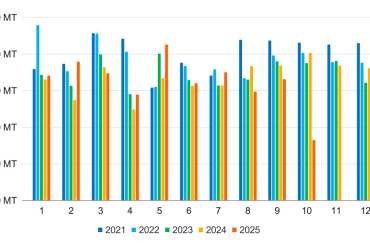
In January 2026, total imports reached 66,935 metric tons, down 6% year-on-year, followed by 58,198 metric tons in February, down 8%. Combined, imports for the first two months totaled 125,133 metric tons, representing a 7% decline compared to the same period last year.
In value terms, imports remained relatively stable in January at $630 million, but dropped to $513 million in February, bringing the year-to-date total to $1.13 billion, down 3% year-on-year.
A Shift from Growth to Contraction
This slowdown follows a period of strong growth earlier in 2025. Imports peaked between March and July before declining steadily from August through the end of the year.
The shift becomes clearer when looking at monthly import volumes over the past few years.
This pattern suggests that the market is now adjusting after a period of expansion. Factors such as tariff changes, inventory corrections, and shifting supply dynamics are likely contributing to this trend.
Product Trends: Not All Segments Are Moving the Same
Different shrimp product categories are showing varied performance:
- Peeled frozen shrimp: down 5% year-to-date
- Shell-on shrimp: down 11%
- Cooked and marinated products: down 16%
- Breaded shrimp: up 17%
While most categories are declining, the continued growth in breaded products suggests resilient demand in value-added segments, particularly in retail and food service.
Supplier Dynamics: Clear Winners and Losers
Changes in supply are not uniform across exporting countries:
- Ecuador continues to expand strongly, with exports up 25% year-to-date
- India, the largest supplier, saw a significant decline of 31%
- Indonesia showed moderate growth (+6%)
- Vietnam declined slightly (-6%)
- Thailand showed mixed performance but remains a smaller supplier
These shifts indicate a rebalancing of supply, with Ecuador gaining market share while other major exporters face pressure.
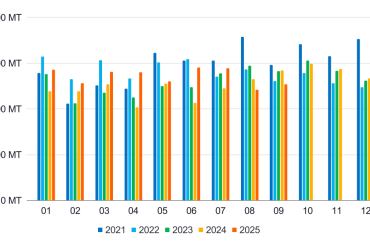
Price trends also reflect how the market has been adjusting over time.
What This Means for the Market
The current trend points to a more cautious market environment.
Key observations:
- Import volumes are declining after a period of strong growth
- Supply is shifting toward more competitive exporters
- Value-added products remain resilient
- Market conditions are becoming more selective
While overall demand in the U.S. remains relatively stable, the data suggests the industry is entering a phase where efficiency, cost control, and positioning in higher-value segments are becoming increasingly important.
Conclusion
The slowdown in early 2026 does not necessarily signal weak demand, but rather a market correction following rapid growth and external pressures such as tariffs and shifting supply dynamics.
For producers and exporters, this highlights a key point:
Success in the current market is not only about volume, but about efficiency, product positioning, and the ability to adapt to changing trade conditions.
Source: Adapted from Shrimp Insights newsletter (2026)
More Related Articles